
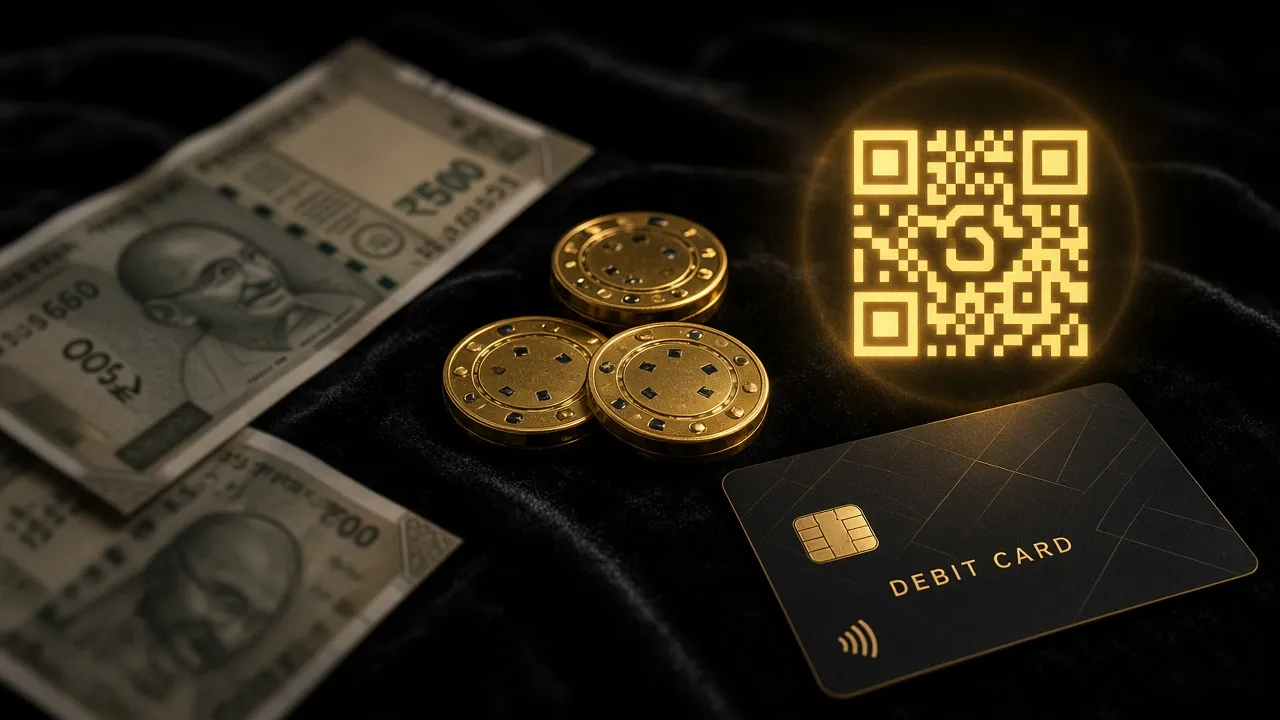
Indian users look for balances in Indian Rupee (INR) and for rails they already use: UPI, bank transfer, and cards. Public cashier write-ups for international gaming brands commonly mention those four. This page repeats only that high-level picture. It does not invent a wallet name, a guaranteed minimum, or a payout clock we cannot see on a live account.
976655.com does not process deposits or withdrawals. Availability, fees, and KYC checks belong to the operator, the bank, and the payment provider. Confirm the list inside the cashier you actually open.
INR
Displaying INR helps users think in familiar units. If a method is not INR-native, conversion and issuer fees can still appear. That is a banking reality, not a “zero-fee” slogan.
UPI
UPI is the default retail rail in India and is the method most readers will ask about first. Whether a given cashier currently shows UPI (including apps people already have, such as those used for everyday transfers) depends on that cashier’s configuration. We do not claim a private integration that we have not operated ourselves.
Bank transfer
Bank transfer on India-facing forms usually means IMPS, NEFT, RTGS, or net banking, labelled in different ways. Settlement can be minutes or the next banking window. Names on the bank account and the product profile should match if a provider asks for verification.
Cards
Visa and Mastercard debit and credit cards are widely issued in India. 3-D Secure, overseas-merchant blocks, and bank fraud filters can still decline a payment even when the brand logo is on the page. That is the issuer protecting the account, not this website “failing”.
For context around play itself, see responsible gaming. For access paths, see the app page.